کتابخانهٔ پیکرتراش — دفتر نخست
The Sculptor's Library — Volume I: Understanding Body Anatomy and Muscles in Sculpture
سلسلهٔ برگردانهای دوزبانهٔ کتابهای مرجع مجسمهسازی، برای هنرجویان و عاشقان پیکرتراشی — به اهتمام محمود کهنسال ساروکلایی (سارو).
A bilingual series of translations of classic sculpture references, for students and lovers of figure sculpture — curated and translated by Mahmoud Kohansal Saroukolaei (Saro).
مولف: دکتر پل ریشر (Paul Richer، ۱۸۴۹–۱۹۳۳) — پزشک، پیکرتراش و استاد آناتومی هنری
مترجم: محمود کهنسال ساروکلایی (سارو، مجسمهساز و پیکرتراش)
نام اصلی کتاب: «Anatomie artistique — Description des formes extérieures du corps humain au repos et dans les principaux mouvements»، پاریس: انتشارات پلوننورری، ۱۸۹۰؛ دو جلد (متن + لوحها)
عکس کتاب — صفحهٔ عنوانِ جلد لوحهای «آناتومی هنری» (پاریس، ۱۸۹۰) از اسکن دیجیتال کتابخانهٔ ملی فرانسه (Gallica/BnF)، اثر در مالکیت عمومی. تصاویر این نوشتار از همین اسکن استخراج و در دامنهٔ سایت مترجم میزبانی میشود.
پیشگفتار مولف
هنرجوی هنر برای ساختن پیکر، به آناتومی پزشکی نیاز ندارد؛ به «آناتومی هنری» نیاز دارد. آنچه پیشِ روی شماست حاصل سالها تدریس آناتومی هنری و همنشینی دو دنیای آزمایشگاه و کارگاه است: از یک سو کالبدِ علمی بدن، و از سوی دیگر نگاه چشمِ تندیسگر که تنها یک چیز را میبیند — فرمِ بیرونی. در این کتاب، اسکلت را نه بهعنوان فهرستی از استخوانها، که بهمثابه «معمارِ پنهانِ» بدن میخوانید؛ و ماهیچهها را نه بهعنوان نامهایی برای حفظکردن، بلکه بهعنوان «پیکرتراشانی» که بر سطح بدن برجستگی و فرورفتگی و نرمی و کشش مینهند.
جلد متن، تکتک ناحیههای بدن را — از سر تا کف پا — در حالت سکون و در حرکتهای اصلی توصیف میکند و جلد لوحها، همان توصیفها را به تصویری میبَرد که بتواند روی میز کارگاه، کنار خاک و سنگ، باز شود. هدف ساده است: هنرمند باید بداند زیر پوست چه میگذرد تا آنچه بیرون میآید، حقیقت داشته باشد؛ فرم از دلِ کارکرد بیرون میآید، نه از حدس و تقلید.
Translator's note on the author's preface: The following preface is a condensed bilingual rendering of the aims Paul Richer states across the opening of his 1890 work, adapted for this series. The artist does not need the physician's anatomy; he needs the anatomy of the external forms of the body at rest and in its principal movements. The skeleton is read as the hidden architect of the figure, the muscles as the sculptors of its surface relief. The text volume describes every region from head to foot; the plate volume sets the same descriptions before the studio bench. Form grows out of function — never out of guesswork.
پیشگفتار مترجم
من هیچ استادی نداشتم.
وقتی نخستین بار دل به سنگ دادم، هیچ استادی کنارم نبود؛ نه کلاسی بود، نه مکتبی، نه کتابی به زبانی که بفهمم و به دستم برسد. هرچه امروز از پیکرتراشی میدانم را با دستهایم و با خطاهایم آموختهام؛ با آن سنگهایی که دور ریختم چون فرمشان را نمیشناختند، و با آن شبهایی که جواب پرسشهایم را باید از خودِ بدن — از آینه، از کالبد خاک، از نگاه ساعتی به آدمها — میگرفتم. سالها بعد، وقتی نام کتابهایی را یافتم که بزرگترین آکادمیهای هنر جهان به هنرجویانشان میدهند، سادهترین پرسش برایم مطرح شد: چرا اینها باید فقط از آن سوی دنیا و فقط به چند زبان مقتدر در دسترس باشد؟
این سلسله جواب من است. تمام تلاشم این است که عاشقان این هنر، به هر چیزی که برای آموختن نیاز دارند، دسترسی آسان داشته باشند. بیواسطه، رایگان، دوزبانه و صریح. اگر جایی در این برگردانها تعبیر دشوار شد، سادهاش میکنم؛ اگر جایی اصطلاح تخصصی آمد، همانجا معنایش را میگویم؛ و اگر جایی از تجربهٔ کارگاه خودم چیزی افزودم، صادقانه جدا از متنِ اصلی نشانش میدهم. این کتابخانه متعلق به هر نوجوانی است که در گوشهای از این سرزمین با یک قلمفرز و تکهسنگی تنهاست.
و یک حرف دیگر هم هست که باید گفت، چون شرط صداقت است: مجسمهسازی و بهویژه پیکرتراشی، در این مملکت ریشهای کهنتر از هر آکادمیای دارد — از سنگنگارهها و سرستونهای تختجمشید تا سردیسها و تندیسهای این خاک. با این حال، تا سالهای نزدیک، از دید بعضی آقایان، این هنر یا حرام شمرده میشد یا دستکم منسوخ و بیارزش؛ نامش را نمیآوردند، جای درسی برایش نمیگذاشتند و هنرجویش را بیپشتوانه میگذاشتند. من از آن نسلیام که این تهیدستی را از نزدیک لمس کرد. میخواهم به ارتقای فرهنگِ این هنر کمک کنم — نه با شعار، که با متنی خواندنی در دسترس هرکس؛ تا پیکرتراشی دوباره به جایگاه طبیعیاش در فرهنگ این سرزمین برگردد و هر که خواست، بداند از کجا باید شروع کند.
چرا این کتاب آغاز راه است؟ چون «آناتومی هنری» پل ریشر همان کتابی است که آکادمی هنر فلورانس — یکی از معتبرترین آکادمیهای هنر کلاسیک جهان — در برنامهٔ درس نقاشی و پیکرتراشی خود بهعنوان متن کلاسیکِ درس آناتومی معرفی میکند، و نسخهٔ فرانسویِ اصلیِ آن از ۱۸۹۰ تا امروز در مالکیت عمومی است و میتوان آزادانه برگرداند و نشر کرد. یعنی همان کتابی که شاگرد فلورانس با آن ساخته میشود، از امروز به فارسی هم در دسترس هنرجوی این سرزمین است. این دفتر، برگردانِ فشرده و دوزبانهٔ گوهرهای دو جلد کتاب است و ادامه دارد.
و یک اعترافِ دیگر هم هست، درست در ادامهٔ همان جملهٔ نخست: گفتم هیچ استادی نداشتم — اما باید صادقتر بگویم؛ دو استاد داشتم که نامشان در هیچ فهرست کتابشناسی نمیآید: پدر و مادر عزیزم. پدرم به من آموخت که کارِ درست، سنگین است و ارزشش را از همان سنگینی میگیرد؛ مادرم به من آموخت که صبوری، آغازِ هر فرم است. در شبهایی که راه بسته بود و روزهایی که کار از راه میرسید، پشتوانهام آن دو بودند، نه چیز دیگر. اگر این برگردان چراغی برای هنرجویی در گوشهای از این سرزمین روشن کند، روشناییِ آن از دعای خیر آن دو است. این دفتر و همهٔ دفترهای پس از آن، تقدیم به پدر و مادرم است — سپاسِ من هرگز به اندازهٔ سهمشان نخواهد رسید.
محمود کهنسال ساروکلایی (سارو) — مجسمهساز و پیکرتراش
sarorobat.github.io — مهر ۱۴۰۵ / اکتبر ۲۰۲۶
Translator's Preface
I never had a master. When I first gave my heart to stone, there was no teacher at my side — no class, no school, no book I could reach in a language I understood. Everything I know about figure sculpture I taught myself, with my hands and through my mistakes: with the stones I threw away because I did not yet know their form, and through the long nights when the only answers came from the body itself — from mirrors, from clay écorchés, from hours of watching people move. Years later, when I finally found the names of the books that the great academies hand to their own students, one simple question confronted me: why should these be available only on the far side of the world, in a handful of powerful languages?
This series is my answer. My whole effort is that lovers of this art should have easy access to everything they need to learn it — direct, free, bilingual, and plainly spoken. Wherever a rendering becomes difficult I simplify it; wherever a technical term appears I explain it on the spot; and wherever I add something from my own studio practice, I mark it honestly as mine, apart from the original text. This library belongs to every young person in some corner of this land, alone with a chisel and a piece of stone.
One more thing must be said, in the name of honesty. Sculpture — and figure sculpture above all — has older roots in this country than any academy: from the reliefs and capitals of Persepolis to the portraits and statues raised on this soil. And yet, until recent years, in the eyes of some of the "gentlemen" here, this art was deemed forbidden — or at best obsolete and worthless. I belong to the generation that felt that poverty firsthand. I want to help raise the culture of this art again — not with slogans, but with readable, accessible text, so that figure sculpture returns to its natural place in the culture of this land, and so that whoever wishes to begin knows where to start.
Why does the road begin with this book? Because Paul Richer's Anatomie artistique is the very text the Florence Academy of Art — one of the world's leading classical art academies — lists as its classic reference for artistic anatomy in its drawing and sculpture programs, and because the French original of 1890 is in the public domain and may be freely translated and published. The book that shapes a student in Florence is, from today, also available in Persian for the students of this land. This first volume is a condensed bilingual rendering of the heart of the work's two books (text and plates); the series continues.
One more confession belongs here, right after that first sentence. I said I never had a master — but let me be more honest: I had two, and their names appear in no bibliography: my dear father and mother. My father taught me that honest work is heavy work, and that it earns its worth from that very weight; my mother taught me that patience is the beginning of every form. On the nights when every road was closed and the days when work finally came, it was those two — and nothing else — that stood behind me. If this rendering lights even one lamp for a student somewhere in this land, that light comes from their prayers. This volume, and every volume to follow in this library, is dedicated to my father and mother — my thanks will never equal what they gave.
Mahmoud Kohansal Saroukolaei (Saro) — Sculptor & Figure Sculptor
October 2026
چکیده
این نوشتار، برگردان فشردهٔ دوزبانه (فارسی/انگلیسی) از اثر کلاسیک «آناتومی هنری» دکتر پل ریشر (پاریس، ۱۸۹۰) است: متن مرجعی که آکادمی هنر فلورانس در برنامهٔ درس آناتومی هنری خود به آن ارجاع میدهد. در دفتر نخست، جایگاه آناتومی هنری در برابر آناتومی پزشکی، سازهٔ استخوانی و نقاط استخوانیِ قابلدیدن بر سطح بدن، و ماهیچههای سطحیِ فرمساز — با تمرکز بر آنچه پیکرتراش در کارگاه واقعاً میبیند — به فارسی و انگلیسی گردآوری و برگردانده شده است. جدول گاهشمارِ آناتومی هنری، یادداشتهای کارگاهی مترجم و فهرست منابع در پایان آمده است.
Abstract. This article is a condensed bilingual (Persian/English) rendering of the classic Anatomie artistique by Dr. Paul Richer (Paris, 1890) — the reference cited by the Florence Academy of Art in its artistic anatomy curriculum. Part I covers: artistic anatomy versus medical anatomy; the bony framework and the bone points visible on the surface; and the superficial, form-shaping muscles as the sculptor actually encounters them in the studio. A timeline of artistic anatomy, the translator's studio notes, and a full source list close the article.
۱. آناتومی هنری در برابر آناتومی پزشکی
پزشک آناتومی را برای تشخیص و درمان میخواهد و نگاهش از درون به بیرون است؛ پیکرتراش برعکس، از بیرون به درون نگاه میکند. او سطح بدن را میبیند — پوست، چربی، تاندون و ماهیچهای که زیر نور و سایه فرم میسازد — و آناتومی را برای این میخواهد که بداند «چرا» سطح اینگونه است. چرا زیر گردن فرورفتگی است؟ چرا هنگام بلندکردن بازو، صفحهای از ماهیچه بر پشت برجسته میشود؟ چرا ساعد به سمت مچ باریک میشود؟ آناتومی هنری، پاسخ این «چرا»ها را با زبان فرم میدهد: نام هر استخوان و ماهیچه فقط وقتی ارزش دارد که حاصلش را روی مدل ببینیم.
ریشر — که خود هم پزشک بود و هم پیکرتراش — دقیقاً از همین نقطه کتابش را آغاز میکند: توصیف «فرمهای بیرونیِ» بدن در سکون و در حرکتهای اصلی. او در آزمایشگاه سالپتریر با آزمایشهای عصبی کار کرده بود و در کارگاه، اکورشهاش را با دست خودش مدل کرده بود؛ به همین دلیل کتابش میان صدها کتاب آناتومی، کتابِ «چشمِ تندیسگر» است.
The physician studies anatomy from the inside out — for diagnosis and treatment. The sculptor looks the other way: from the outside in. He sees the surface — skin, fat, tendon, and the muscle modeling itself in light and shadow — and he wants anatomy so that he knows why the surface is as it is. Why the hollow beneath the neck? Why does a plate of muscle rise across the back when the arm is lifted? Why does the forearm taper toward the wrist? Artistic anatomy answers these "whys" in the language of form: the name of each bone and muscle matters only when we can see its result on the model.
Richer — himself both physician and sculptor — begins precisely here: a description of the external forms of the body at rest and in its principal movements. Having worked in the laboratory at the Salpêtrière and modeled his own écorché by hand, he wrote the book through the sculptor's eye, which is why, among hundreds of anatomy manuals, his remains the sculptor's book.
۲. اسکلت: معمارِ پنهانِ فرم
زیر هر پیکری که میتراشیم، سازهای از حدود دویست استخوان ایستاده است. برای پیکرتراش، اسکلت سه نقش دارد: سازهٔ ایستایی (ستون فقرات، لگن، پاها وزن را میگیرند و به زمین میرسانند)، اهرمِ حرکت (ماهیچه به استخوان میچسبد و استخوان دور مفصل میچرخد)، و نقاط راهنمای سطح. این نقاط — که استادانشان «نقاط استخوانی» مینامند — همان جاهاییاند که استخوان از زیر پوست خودش را نشان میدهد و در هر ژستی ثابت میماند: دو انتهای ترقوه، برجستگی شانه (آکرومیون)، لبهٔ بالایی لگن، زائدههای خاردار ستون فقرات، زانو (کشکک)، مچ پا، آرنج (آونکولن بازو). اگر این نقاط را درست بگذارید، حتی در پیکری چاق یا کودک، بدن «درست سرِ جای خودش» مینشیند.
برای شروع، سه خوشهٔ استخوانی را از حفظ بشناسید: سرِ استخوانی (جمجمه با چشمخانهها، پیشانی، گونه و فک)، قفسهٔ سینه (جناغ، دندهها — که تخممرغیِ تنه را میسازند — و ترقوهها)، و لگن (که کاسهٔ شکم و نقطهٔ تلاقی تنه و پاهاست؛ تفاوت زنانه و مردانهاش، پایهٔ تفاوت سیلوئت دو جنس است). لوح ۱ (اسکلت از نمای پیشین) را با دقت ببینید: نسبت سر به کل، عرض شانهها نسبت به لگن، و زاویهٔ خطی که از لگن تا زانو تا مچ پا میرود — همه را پیش از هر مدلسازی، از همین استخوانها بخوانید.
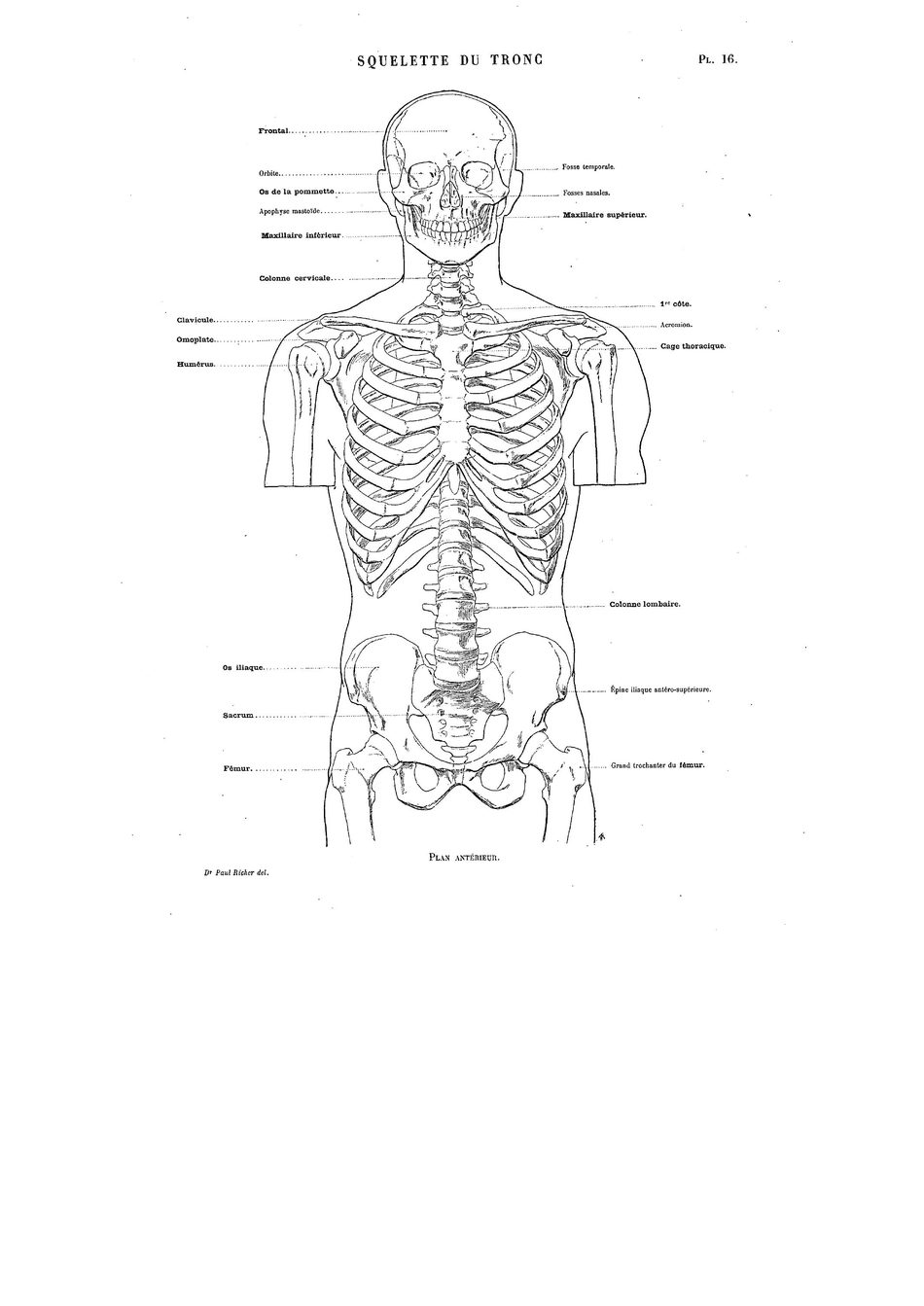
لوح ۱ — اسکلت از نمای پیشین (Squelette de face)؛ جلد لوحهای «آناتومی هنری»، پاریس ۱۸۹۰، اسکن Gallica/BnF — مالکیت عمومی.
Beneath every figure we carve stands a framework of some two hundred bones. For the sculptor the skeleton plays three roles: a static structure (spine, pelvis and legs collect the weight and deliver it to the ground), a lever system for movement (muscles fasten to bone and turn bone about joints), and a set of surface landmarks. These "bone points" — where bone shows itself under the skin and holds still in every pose — are the sculptor's fixed coordinates: the two ends of the clavicles, the acromion at the shoulder, the rim of the pelvis, the spinous processes of the spine, the kneecap, the ankle, the elbow (olecranon). Place these points correctly and even an overweight or child figure will sit "correctly in its own body."
Begin by knowing three bony clusters by heart: the bony head (skull: orbits, forehead, cheekbone, jaw), the thorax (sternum and ribs forming the egg of the torso, plus the clavicles), and the pelvis (the basin where trunk meets legs; its sexual differences underlie the silhouette of the two figures). Read Plate 1 (the skeleton, anterior view) carefully: the head-to-total ratio, the shoulder width against the pelvis, and the line descending pelvis–knee–ankle — take all of it from the bones before you touch the clay.
۳. ماهیچهها: پیکرتراشانِ سطح بدن
بیش از ششصد ماهیچه در بدن هست، اما پیکرتراش تنها با لایهٔ سطحی سر و کار دارد: همان ماهیچههایی که بهقدر کافی نزدیک پوستاند و فرم بیرونی را میسازند. سه مفهوم ساده همهٔ آنها را برای شما میخواند: مبدأ و مرزِ پیوند (ماهیچه از استخوانی میخیزد و به استخوانی دیگر میپیوندد؛ معمولاً از استخوانِ ثابت به استخوانِ متحرک)، بافتار (غلافی که ماهیچهها را به هم میلغزاند و سطح بدن را یکدست و لطیف میکند)، و حرکت (ماهیچه منقبض میشود، کوتاه و کلفت میگردد و فرم را عوض میکند). تندیس ساکنِ خوب، همان تندیسای است که بتوان از حالتِ آن، حرکتِ پیش یا پس را حدس زد؛ فرم همیشه حاصل کارکرد است.
دو لوح اکورشه در ادامهٔ همین بخش، «لغتنامهٔ فرمِ» پیکرتراش است: لوح ۲ از نمای پیشین و لوح ۳ از نمای پشتی. پیشنهاد مترجم به هنرجویان: این دو لوح را با هم مقایسه کنید و از هر ماهیچه بپرسید «از کجا میخیزد، به کجا میرود، چه فرمی زیر پوست میسازد؟» — همین یک پرسش، بهتر از ده ساعت حفظکردن نامها کار میکند.
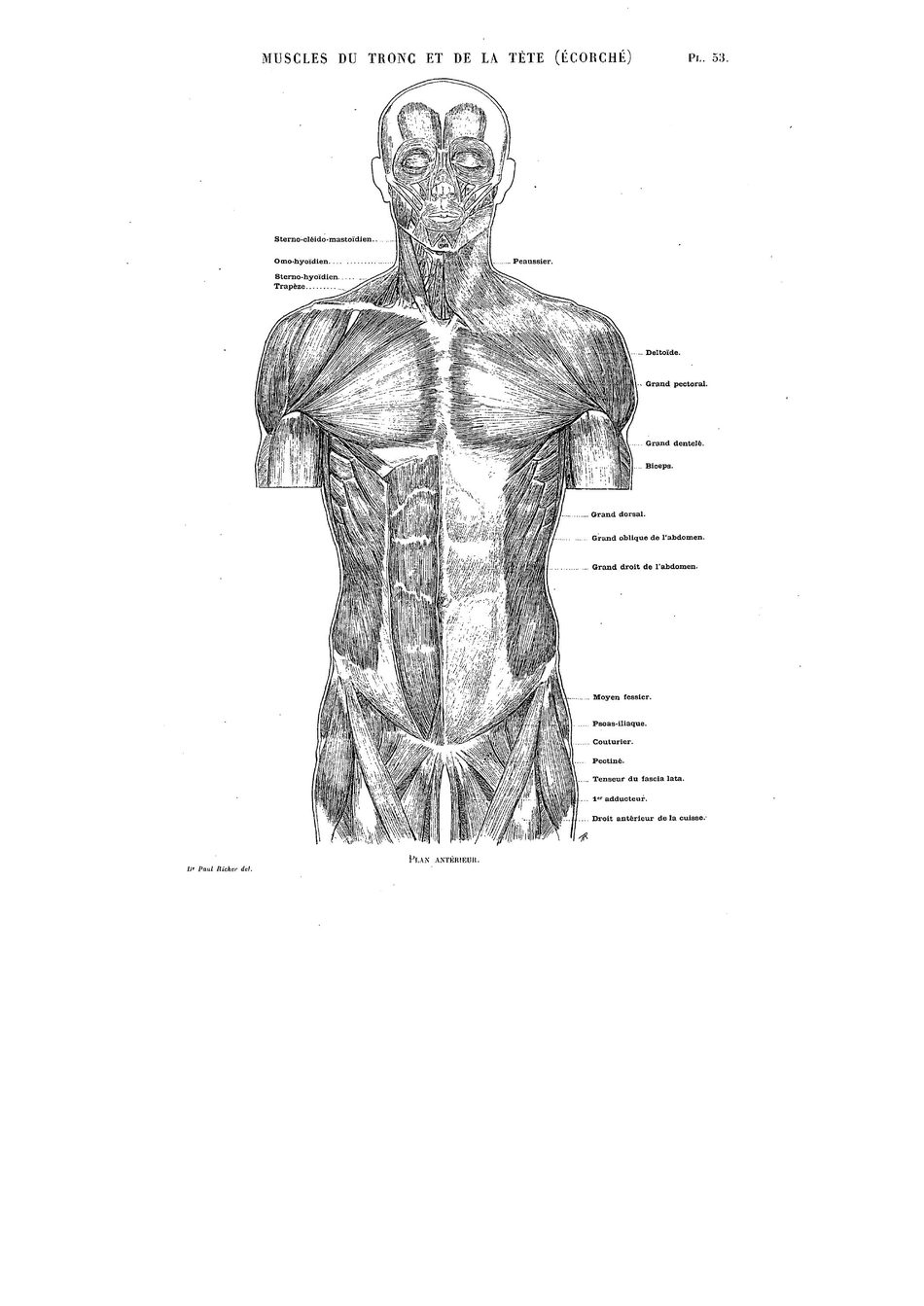
لوح ۲ — پیکرِ بیپوست (اکورشه) تمامقد، نمای پیشین؛ «آناتومی هنری» پاریس ۱۸۹۰ — مالکیت عمومی.
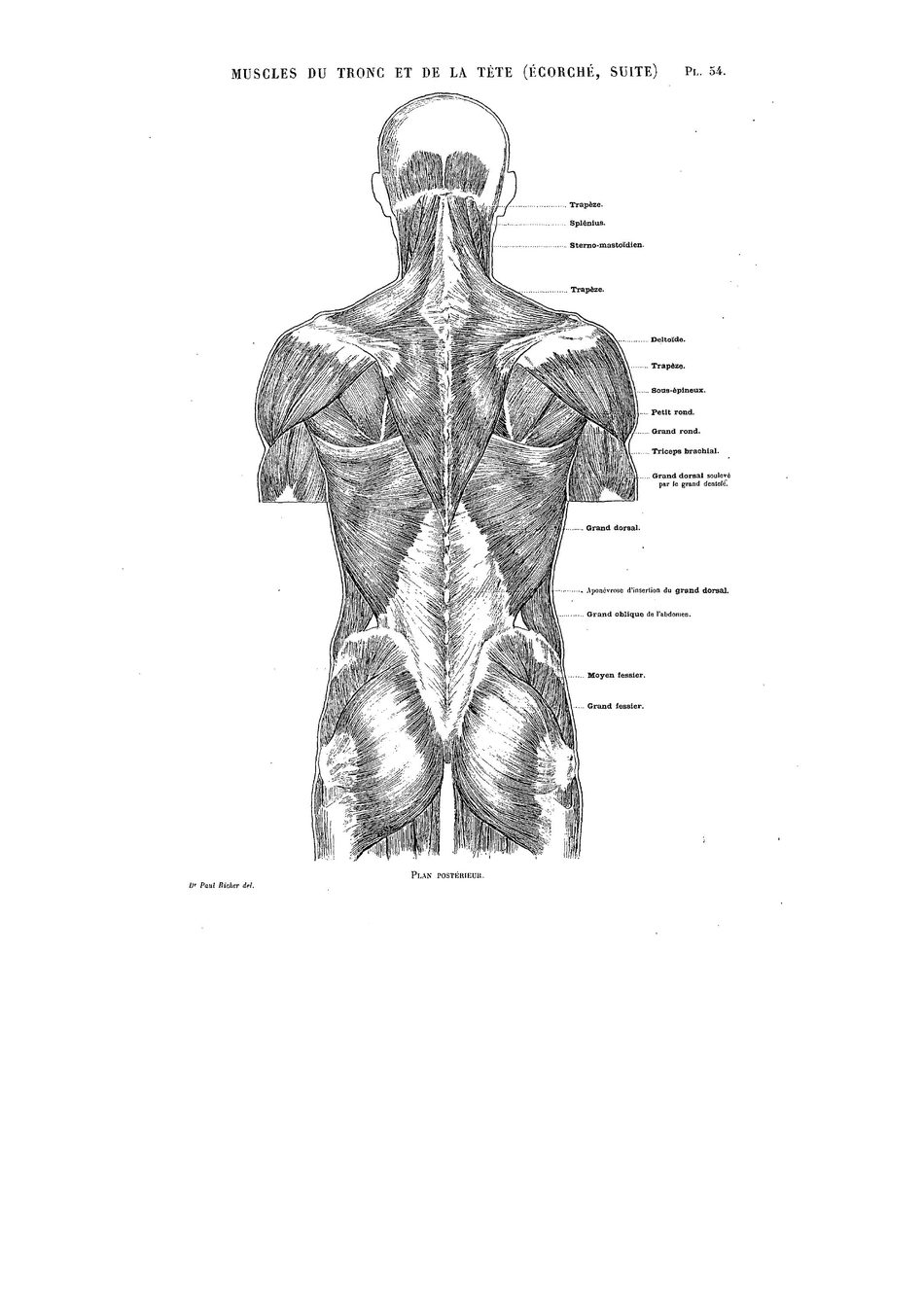
لوح ۳ — اکورشه تمامقد، نمای پشتی؛ «آناتومی هنری» پاریس ۱۸۹۰ — مالکیت عمومی. برجستگی ماهیچههای کشیدهٔ پشت و بند کمر از نمای پشتی بهتر خوانده میشود.
More than six hundred muscles crowd the body, but the sculptor deals with the superficial layer only — the muscles close enough to the skin to build the visible form. Three simple ideas read them all: origin and insertion (a muscle rises from one bone and fastens to another — usually from the fixed bone toward the moving one); fascia (the sheathing that lets muscles glide against each other and gives the surface its unity and softness); and action (a muscle contracts, shortens, thickens — and the form changes). A good standing figure is one from which you can guess the movement just before and just after; form is always the record of function.
The two écorché plates that follow are the sculptor's vocabulary: Plate 2 anterior, Plate 3 posterior. The translator's advice to students: compare the two and ask of every muscle, "where does it rise, where does it go, what form does it build under the skin?" That one question outworks ten hours of memorizing names.
۴. سر، گردن و تنه: کارگاهِ اصلیِ فرم
سر را دو ساختار میسازد: کلاهخودِ جمجمه و کاسهٔ صورت. برای پیکرتراش، پنج نشانهٔ سطحی سر از همه چیز مهمتر است: برآمدگی پیشانی، کمان گونه، لبهٔ چشمخانه، زاویهٔ فک و سوراخ بینی. گردن را آن «طنابِ» آشنا میسازد که با چرخش سر کشیده و سفت میشود — ماهیچهٔ جناغیچنبریپستانی — بههمراه ذوزنقهای که از پسِ گردن تا میانهٔ پشت فرود میآید. هرگاه در تندیس سر به سویی چرخیده، ببینید این طناب در همان سویِ چرخش نازک و در سوی دیگر برجسته میشود؛ این همان چیزی است که گردن را «زنده» نشان میدهد.
تنه جعبهای است که ماهیچهها میپوشانند. در پیش، ماهیچهٔ سینهای بزرگ — بادبزنی که از ترقوه و جناغ به بازو میرود — سینهٔ مردانه را پهن و صاف میکند و در زن، زیر بافت چربی، جهت بادبزن را میتوان حدس زد. راستِ شکمی با بندهای وتریِ میانراهش همان پلههای آشنا را میسازد و موربهای بیرونی، پهلوها را به لگن میبندند؛ ارهایِ پیشین با انگشتان کوچکش بر دندهها مینشیند و در پیکرهای جوان و ورزیده دیده میشود. در پس، ذوزنقهای گوینی را میبندد و پشتیِ بزرگ — بالهای پشت — هنگام کشیدن و بالا آوردن، پهن میشود. لوح ۴ بادبزن سینه را با برجستگیها و اتصالهایش نشان میدهد و لوح ۵، لایههای عمیقتر پشت را که ذوزنقهای بزرگ رویشان مینشیند.
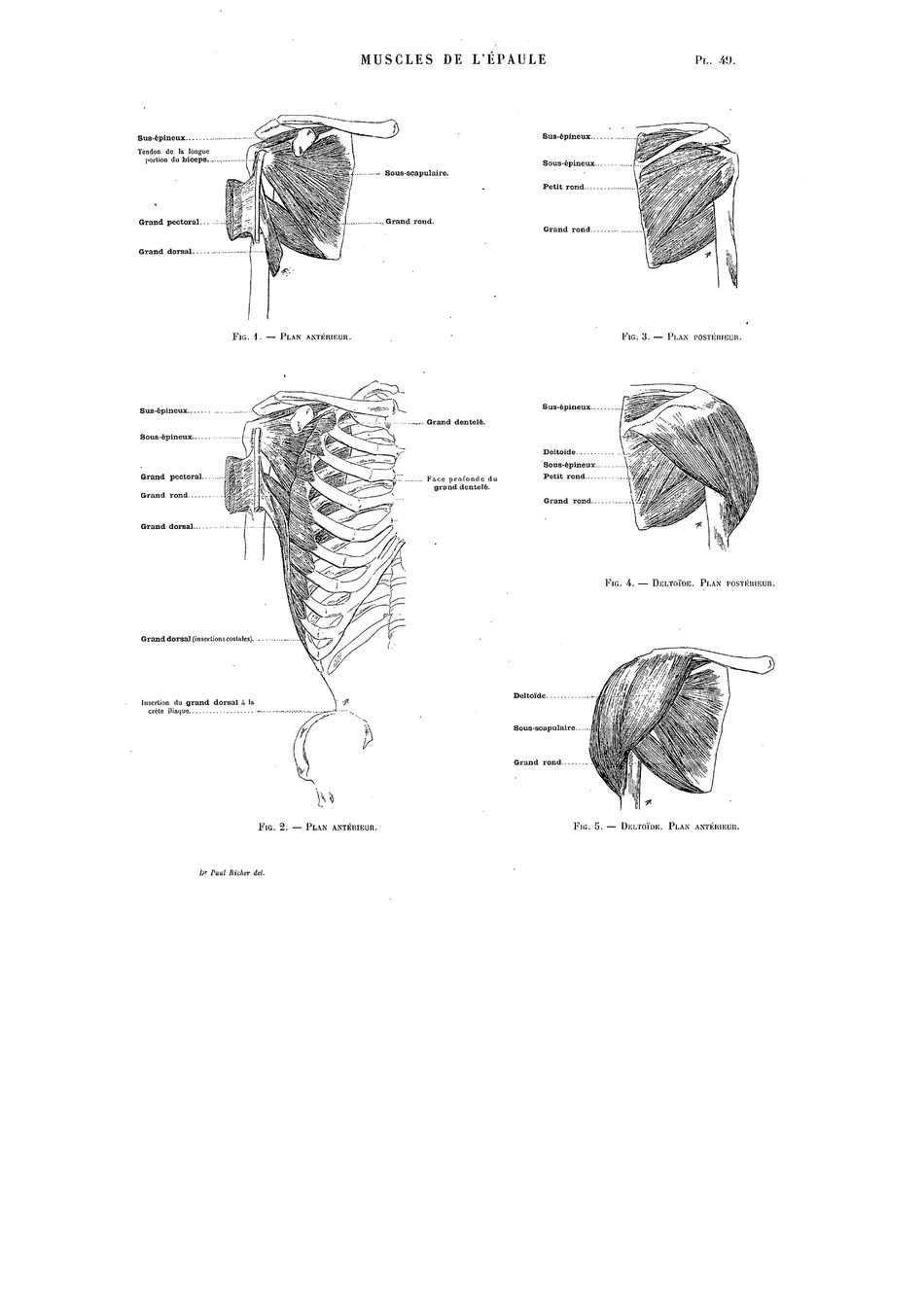
لوح ۴ — ماهیچههای سینه و اتصال بادبزن سینهای به بازو؛ «آناتومی هنری» پاریس ۱۸۹۰ — مالکیت عمومی.
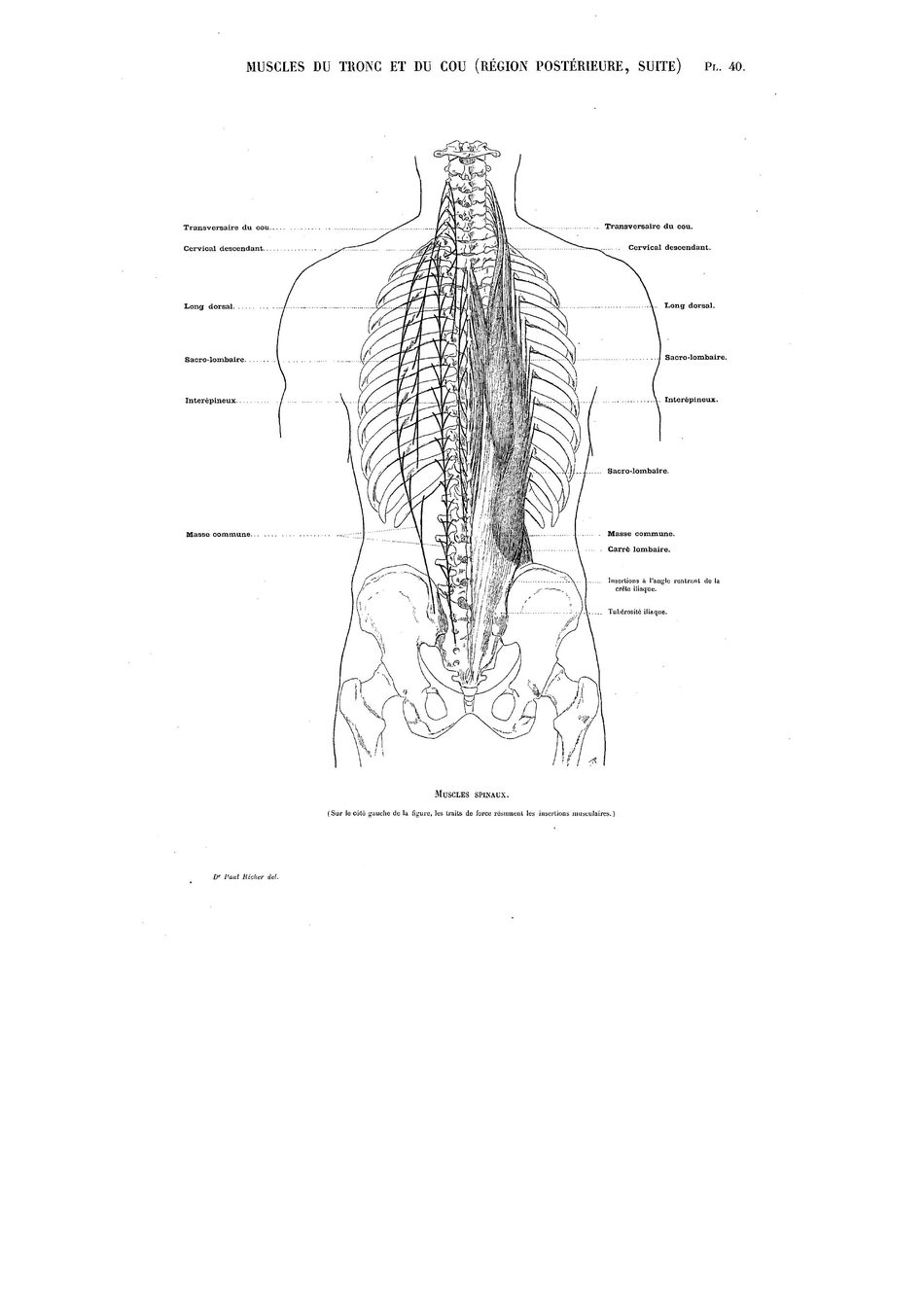
لوح ۵ — ماهیچههای پشت (لایههای سطحی و عمقی)؛ «آناتومی هنری» پاریس ۱۸۹۰ — مالکیت عمومی.
The head is built of two structures: the helmet of the cranium and the cage of the face. Five surface signs matter most to the sculptor: the frontal bosses, the arch of the cheekbone, the rim of the orbit, the angle of the jaw, and the bridge of the nose. The neck is shaped by that familiar rope that tightens when the head turns — the sternocleidomastoid — together with the trapezius descending the nape. Whenever a carved head turns, watch the rope thin on the side of the turn and swell on the other; this is what makes a neck read as "alive."
The trunk is a box clothed in muscle. In front, the pectoralis major — a fan running from clavicle and sternum to the arm — broadens the male chest; in the female, under the fatty layer, the direction of the fan can still be guessed. The rectus abdominis builds its familiar tiers across its tendinous bands; the external obliques lash the flanks to the pelvis; the serratus anterior sets its small fingers on the ribs and shows in young, athletic figures. Behind, the trapezius closes the lozenge of the back, and the latissimus dorsi — the wings of the back — spreads when the arm pulls or rises. Plate 4 shows the chest fan and its fastening to the arm; Plate 5, the deeper layers the great trapezius covers.
۵. اندامها: بازو و ساق
بازو را دو ماهیچهٔ مشهور میسازند: دوسر در پیش و سهسر در پس؛ میان آنها در نمای کناری، پیشانیِ بازو (براکیالیس) تکهای است که کنار دوسر برجسته میشود. ساعد دو تودهٔ ماهیچهای دارد — خمکنندهها در پیش و راستکنندهها در پس — که هر دو به سمت مچ باریک و از تاندون میگذرند؛ به همین دلیل ساعدِ خوب، کلیدیشکل است: کلفت در آرنج، نازک در مچ. لوح ۶ این باریکشدن و مسیر تاندونها را به پیکرتراش نشان میدهد.
پا سازهٔ وزن است و فرمش از همین کارکرد میآید: چهارسر در پیشِ ران، خمکنندههای زیرزانویی در پس، خیاطه بهصورت نوارِ موربی از لگن به داخل زانو میخزد، و ساق را دو قلو (گاستروکنمیوس) میسازد که با تاندون آشیل به پاشنه میرسد. لوح ۷ چگونگی پیوستن تودهٔ ساق به مچ پا و جهت کشش تاندونها را نشان میدهد؛ همان جایی که در سنگ، یک لبهٔ درست، تفاوتِ «پای ایستاده» و «پای افتاده» را میسازد.
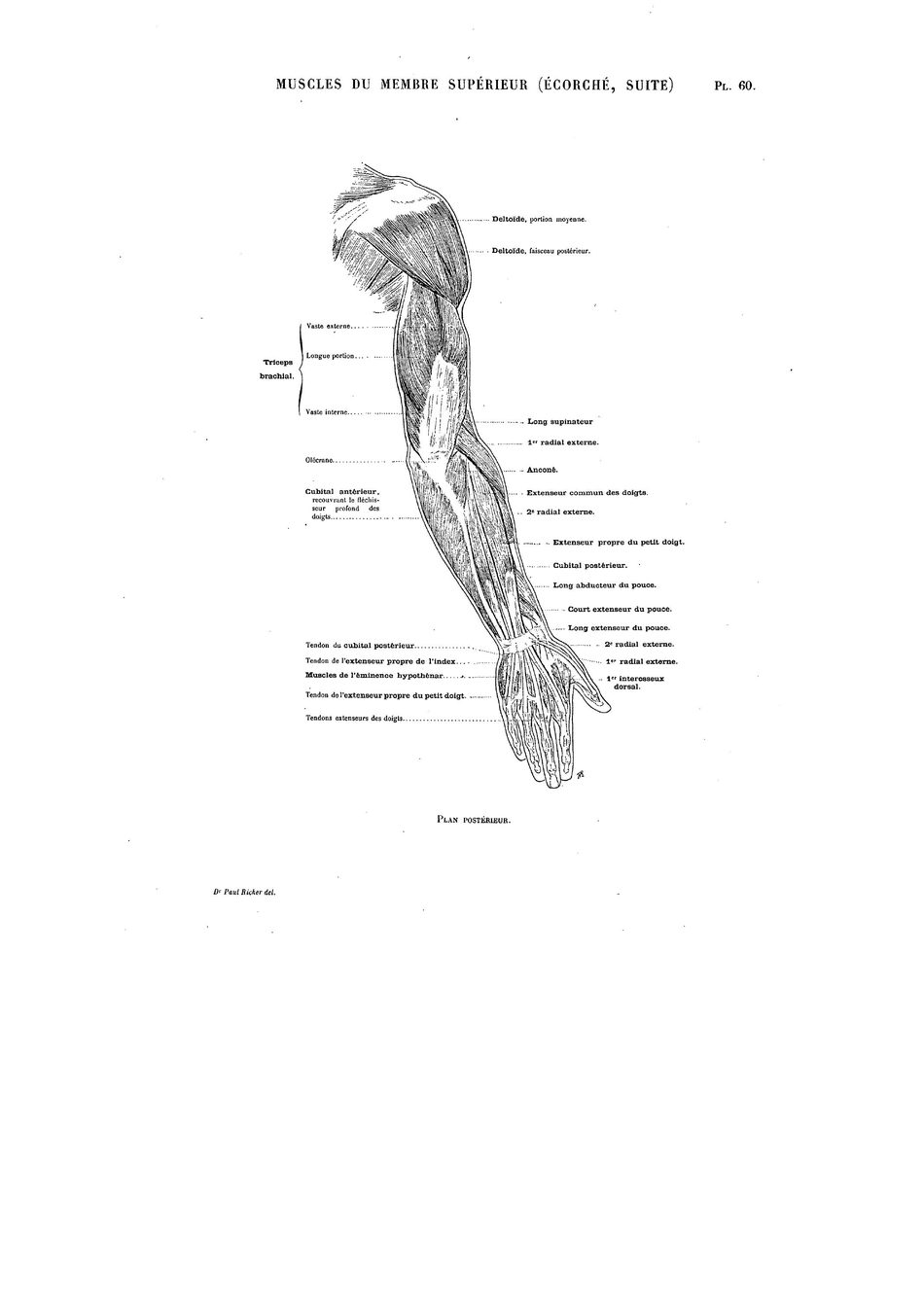
لوح ۶ — ماهیچههای ساعد و گذر تاندونها به مچ؛ «آناتومی هنری» پاریس ۱۸۹۰ — مالکیت عمومی.
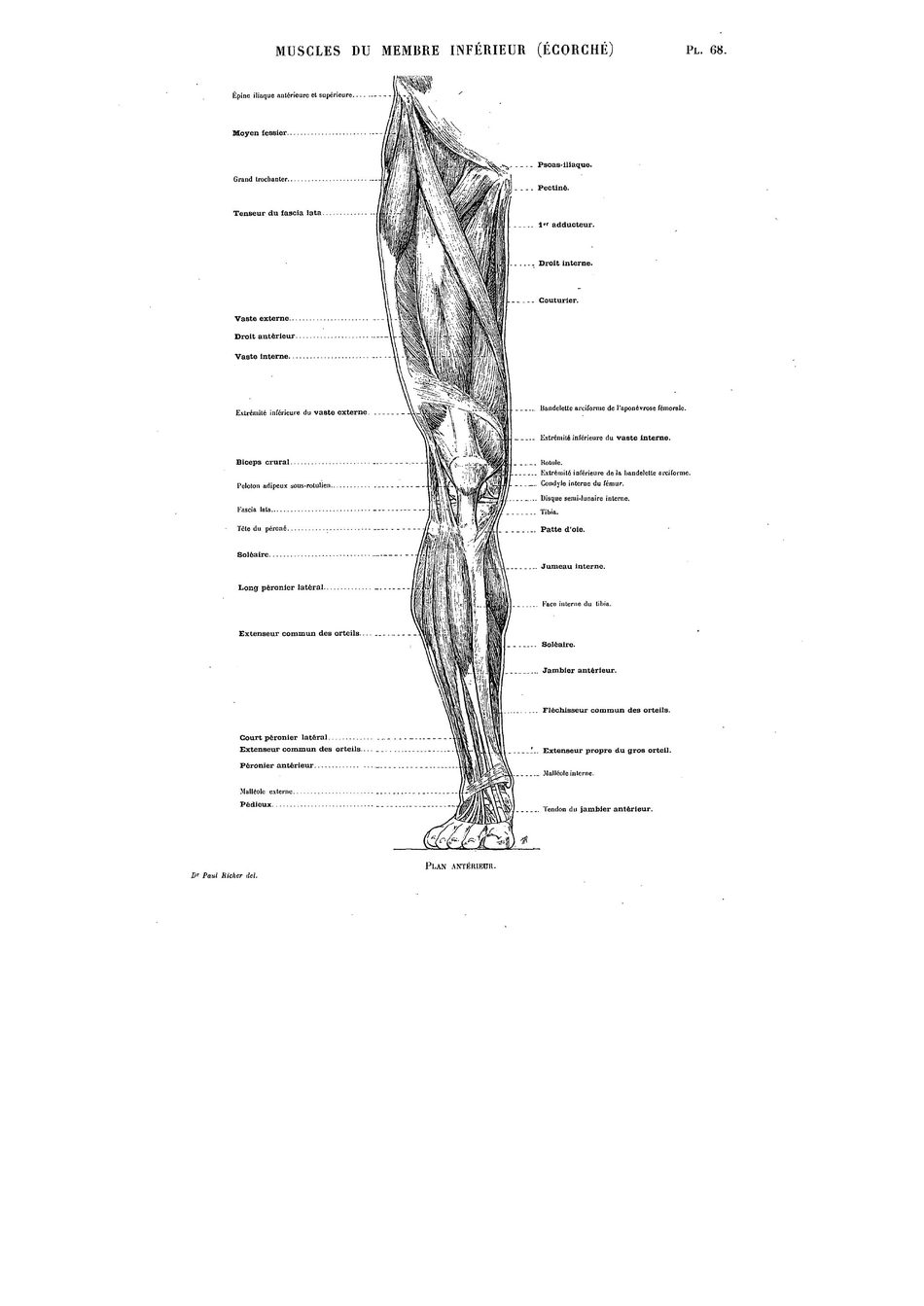
لوح ۷ — ماهیچههای اندام تحتانی؛ «آناتومی هنری» پاریس ۱۸۹۰ — مالکیت عمومی.
The upper arm belongs to two famous muscles — the biceps in front, the triceps behind — with the brachialis peeking beside the biceps in side view. The forearm carries two masses — flexors before, extensors behind — both tapering to the wrist and passing into tendon; hence a well-read forearm is key-shaped: full at the elbow, narrow at the wrist. Plate 6 shows this taper and the run of the tendons.
The leg is a weight-bearing structure and its form follows that duty: the quadriceps before the thigh, the hamstrings behind, the sartorius crossing as a diagonal band from pelvis to inner knee, and the calf built by the twin gastrocnemius running to the heel on the Achilles tendon. Plate 7 shows how the calf mass feeds the ankle and the pull of the tendons — the very place where, in stone, one correct edge separates a standing leg from a collapsed one.
۶. تناسبات و کانون: معیارِ سر
چشم بیمعیار، گرفتار جزئیات میشود. معیارِ سنت، مقیاس سر است: ارتفاع پیکرِ ایستادهٔ بالغ در قاعدهٔ کلاسیک میان هفتونیم تا هشت سر است و نیمهٔ بدن تقریباً بر استخوان عانه میافتد. ریشر این معیارها را بهجای سنتِ شفاهی، بر اندازهگیریهای علمی بنا کرد و نتیجه را در کتاب جداگانهای چاپ کرد: «کانون تناسبات بدن انسان» (۱۸۹۳). برای هنرجو، فراموشنکردنیها همین چند است: عرض شانهٔ مرد دوسهسر است، خط چشم در میانهٔ ارتفاع سر مینشیند، و فاصلهٔ آرنج تا مچ، اندازهٔ پای است. کانون، اسیرکننده نیست؛ نردبان است — تا وقتی که چشم خودتان تربیت شود.
The eye without a measure drowns in detail. The classical measure is the head module: the standing adult figure reads between seven-and-a-half and eight heads, and the body's midpoint falls near the pubic bone. Richer rebuilt these measures on scientific observation rather than workshop hearsay, and issued them as a separate book, the Canon of the Proportions of the Human Body (1893). For the student, the unforgettable few are: the male shoulders read two head-heights wide; the eye-line sits at the mid-height of the head; and elbow-to-wrist equals the length of the foot. The canon is not a cage — it is a ladder, until your own eye is trained.
۷. اکورشه: روشی که فلورانس هنوز تدریس میکند
اکورشه — پیکرِ «بیپوست» — تمرینی است که در آن هنرجو پیکری را از استخوان آغاز میکند و ماهیچهها را یکییکی، به ترتیبِ عمق، بر آن مینشاند. هدف، حفظکردن نامها نیست؛ ساختنِ «حافظهٔ دست» است: دستی که جایی برای هر ماهیچه بلد باشد. آکادمی هنر فلورانس همین روش را در برنامهٔ آناتومی هنری خود — با نام «فرم زنده» — تدریس میکند و کلاس اکورشهٔ پیکرتراشی، بخش پیشرفتهٔ همان برنامه است؛ و متن کلاسیکِ ارجاع این درسها همان «آناتومی هنری» ریشر است. اکورشهٔ معروفِ خود ریشر — تندیسِ برنزیِ پیکرِ بیپوست — تا امروز در آتلیههای جهان مرجع کار است و همین لوحها (۲ و ۳) تصویرِ دومُدِ آناند.
The écorché — the "flayed" figure — is the exercise in which the student builds a figure from the skeleton and sets the muscles upon it one by one, in order of depth. The aim is not to memorize names but to build a memory in the hand: a hand that knows where every muscle belongs. The Florence Academy of Art teaches exactly this method in its artistic anatomy program, "The Living Form," with the écorché sculpture class as its advanced portion — and the classic reference cited for these studies is Richer's Artistic Anatomy. Richer's own famous bronze écorché remains a studio reference worldwide, and the plates above (2 and 3) are its two-dimensional counterparts.
۸. یادداشتهای کارگاهی مترجم: از لوح تا سنگ
پایان این دفتر، سه یادداشت از کارگاه خودم است — جدا از متن اصلی، چون قول دادم افزودنیهایم را صادقانه جدا نشان دهم:
۱. پیش از هر تراش، نقاط استخوانی را بگذارید. در خاک میتوان اضافه کرد؛ در سنگ نه. نخستین کارم روی هر پیکر، گذاشتن پنجشش نقطهٔ ثابت است: دو انتهای ترقوه، آکرومیون، لبهٔ لگن، کشکک، مچ پا. تا این نقاط با هم «نشسته» باشند، یک ذره هم فرم نمیتراشم. با کانونِ سر نیز نسبت کل را میسنجم و تنها بعد وارد حجم میشوم.
۲. اکورشهٔ کاغذی بسازید. دو لوح اکورشهٔ همین نوشتار را چاپ کنید و کنار میز بزنید. هرگاه در پیکرتان جایی «غریبه» بود — برجستگی بیدلیل، فرورفتگی بیمالک — به لوح برگردید و بپرسید این نقطه مالِ کدام ماهیچه است. بیشترین اصلاحهای کار من از همین پرسش آمده است.
۳. فرم را از کارکرد بخوانید. مدلِ شما اگر بازو را بالا برده، بدانید چه ماهیچهای باید تخت شود و چه ماهیچهای باید برجسته. تندیسِ ساکنِ درست، روایتی است از یک حرکتِ ممکن. اگر جایی از پیکر، «روایت» نداشت، میدانم که اشتباهی آنجاست — حتی اگر چشم ناآشنا زیبایش بداند.
Translator's studio notes — apart from the original text:
1. Set the bone points before any carving. Clay can be added; stone cannot. My first work on any figure is placing five or six fixed points — clavicle ends, acromion, pelvic rim, kneecap, ankle. Until these sit together correctly, I cut no form; and I check the whole with the head module before entering the volume.
2. Make a paper écorché. Print the two écorché plates and hang them by the bench. Whenever a spot on your figure feels "strange" — an unmotivated bulge, an ownerless hollow — return to the plate and ask which muscle owns that point. Most of my corrections have come from that single question.
3. Read form from function. If your model raises an arm, know which muscle must flatten and which must swell. A correct standing statue narrates a possible movement; where the figure has no "story," I know I am wrong there — even if an untrained eye finds it beautiful.
گاهشمار آناتومی هنری
| زمان | رویداد | یادداشت |
|---|---|---|
| حدود ۱۴۸۹–۱۵۱۳ | دفترهای کالبدشناسی لئوناردو داوینچی | نخستین پروژهٔ نظاممند آناتومی برای هنرمند؛ بر پایهٔ کالبدشکافی شخصی |
| سدهٔ ۱۶ | میکلآنژ و کالبدشکافی در فلورانس و رم | پیوند مستقیم پیکرتراشی و آناتومی در اوج نوزایی |
| ۱۵۶۸ | دو رسالهٔ بنونتو چلینی (فلورانس) | پیکرتراشی از زبان پیکرتراش؛ بررسی در نوشتار پیشین همین وبلاگ (post/16) |
| ۱۷۴۷ | «لوحهای اسکلت و ماهیچهها» آلبینوس (لیدن) | زیباترین اطلس آناتومی سدهٔ هجدهم، در اختیار هنرمندان |
| ۱۸۹۰ | «آناتومی هنری» پل ریشر (پاریس) | متن حاضر — دو جلد: توصیف فرمهای بیرونی + لوحها |
| ۱۸۹۳ | «کانون تناسبات بدن انسان» ریشر | معیارهای تناسبات بر پایهٔ اندازهگیری علمی |
| ۱۹۷۱ | ترجمهٔ انگلیسی رابرت بورلی هیل (نیویورک) | ترجمهٔ استاندارد انگلیسی؛ دارای کپیرایت — برگردان حاضر از متن فرانسوی اصلیِ ۱۸۹۰ است |
| امروز | آکادمی هنر فلورانس — «فرم زنده» و کلاس اکورشه | همان متن ریشر، همچنان مرجع کلاسیک برنامهٔ آناتومی |
یادداشت انتشار
۱. وضعیت حقوقی: اثر اصلی (پل ریشر، ۱۸۹۰؛ درگذشت مولف ۱۹۳۳) در مالکیت عمومی است و اسکن دیجیتال کتابخانهٔ ملی فرانسه (Gallica/BnF) بازنشر آزاد آن را تصریح میکند. ترجمهٔ انگلیسی ۱۹۷۱ دارای کپیرایت است و در این برگردان استفاده نشده است؛ مبنای کار، متن فرانسوی اصلیِ ۱۸۹۰ است.
۲. ماهیت کار: برگردانِ فشردهٔ دوزبانه و گزیده از دو جلد کتاب (متن + لوحها) است، نه ترجمهٔ تحتاللفظی کامل؛ توصیفهای فنی فصلهای ۱ تا ۸ بر ساختار و مضمون اثر اصلی استوار است و یادداشتهای کارگاهی مترجم جداگانه نشان داده شده است.
۳. تصاویر: همهٔ لوحها از اسکن Gallica/BnF استخراج و در دامنهٔ مترجم (sarorobat.github.io) میزبانی میشود؛ ارجاع منبع زیر هر تصویر آمده است.
۴. سلسله: این دفتر نخستِ «کتابخانهٔ پیکرتراش» است؛ دفاتر بعدی به ترتیب انتشار خواهند آمد.
منابع
- Richer, Paul. Anatomie artistique: description des formes extérieures du corps humain au repos et dans les principaux mouvements. Paris: E. Plon, Nourrit et Cie, 1890 — جلد متن. اسکن کامل: archive.org/details/AnatomieArtistiqueDescriptionDesFormesExtrieuresDuCorpsHumain
- همان اثر — جلد لوحها (Planches)، پاریس ۱۸۹۰ (مبنای تصاویر این نوشتار؛ در همان نشانی، فایلهای T1 و T2).
- Gallica — کتابخانهٔ ملی فرانسه (BnF)، صفحهٔ اثر و حکم مالکیت عمومی: gallica.bnf.fr
- Richer, Paul. Canon des proportions du corps humain. Paris, 1893. در: gallica.bnf.fr (NUMM-83040)
- Richer, Paul. Physiologie artistique de l'homme en mouvement. Paris, 1895. اسکن: archive.org/details/physiologieartis00rich
- Richer, Paul. Nouvelle anatomie artistique du corps humain, ت. ۲. Paris, 1906. اسکن: archive.org/details/nouvelleanatomie02rich
- Florence Academy of Art — برنامهٔ درس نقاشی و طراحی، ارجاع به متن کلاسیک ریشر: florenceacademyofart.edu/certificate-programs/drawing-painting
- Florence Academy of Art — «The Living Form» و کلاس اکورشهٔ پیکرتراشی (بخش پیشرفتهٔ برنامهٔ آناتومی هنری): florenceacademyofart.edu/certificate-programs/electives
- Florence Academy of Art / Sweden — فهرست مطالعهٔ پیکرتراشی (ریشر بهعنوان مهمترین مرجع): florenceacademyofart.edu
- کهنسال ساروکلایی، محمود (مترجم). «بنونتو چلینی، استاد فلورانسیِ پیکرتراشی» — برگردان دوزبانهٔ رسالهها، وبلاگ پیکرتراشی سارو، post/16: zadrock2020.blogfa.com/post/16
- Hale, Robert Beverly (trans.). Artistic Anatomy (English edition of Richer). New York: Watson-Guptill, 1971 — تنها بهعنوان یادداشت تاریخی.
«کتابخانهٔ پیکرتراش» — دفتر نخست | برگردان دوزبانه برای عاشقان پیکرتراشی | به اهتمام محمود کهنسال ساروکلایی (سارو، مجسمهساز و پیکرتراش) | این نوشتار بخشی از پروندهٔ آموزشی آناتومی مجسمهسازی در وبلاگ و سایت سارو است.